By Tameside CBD Shop · Reviewed 3 October 2026
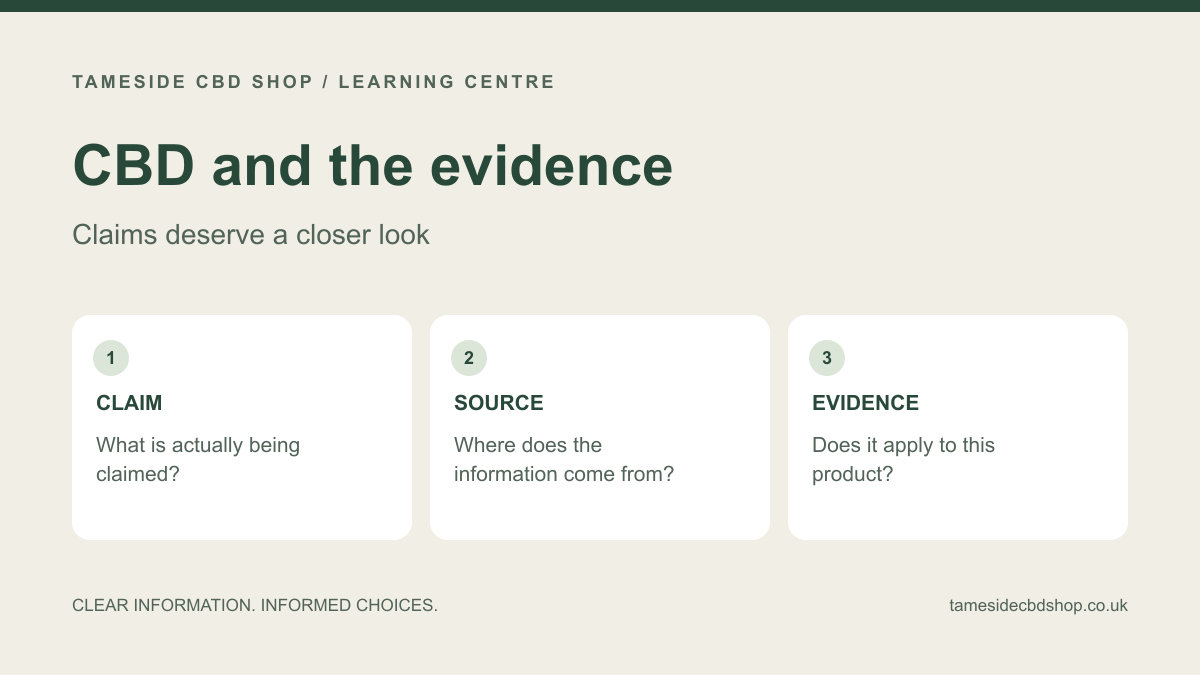
A personal story about CBD is not proof that a shop product treats a health condition. Retail CBD supplements should not be presented as medicines.
What counts as useful evidence?
Ask what was tested, in whom, at what amount and against what comparison. A study of a particular purified medicine does not establish the effect of every oil or gummy sold online. Laboratory findings also do not automatically show that a product works in everyday use.
Prescription products are a different category
Specific cannabis-based medicines can be prescribed for limited clinical circumstances. That does not make an ordinary retail CBD product equivalent to a licensed medicine. The NHS explains the distinction and the uncertainties around products sold without prescription.
Source: NHS: medical cannabis. Checked 3 October 2026.
How we describe our range
We describe formats, ingredients, strengths and available product documentation. We do not recommend products to treat anxiety, pain, insomnia or other conditions, and we do not promise a particular result.
Be cautious of cure claims
UK advertising rules restrict health claims and prohibit claims that foods prevent, treat or cure disease. A disclaimer underneath a product claim does not turn it into reliable evidence.
Source: ASA/CAP: CBD advertising claims. Checked 3 October 2026.
What can you compare as a shopper?
Compare what can be checked: quantity, concentration, ingredients, price and whether a report matches the batch. If your reason for considering CBD is a health concern, speak to a qualified healthcare professional. Do not stop or replace prescribed treatment.