By Tameside CBD Shop · Reviewed 3 October 2026
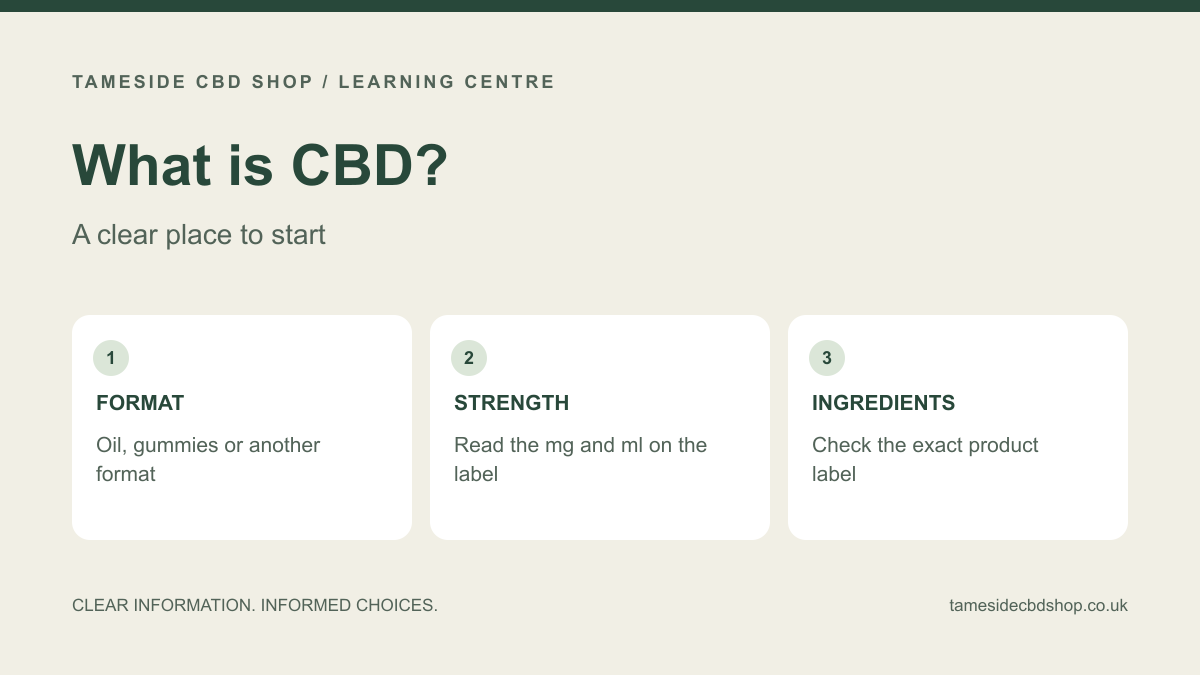
CBD stands for cannabidiol, a cannabinoid found in cannabis and hemp plants. It is an ingredient, not a product format: the same term appears on oils, sprays and edibles.
Is CBD the same as THC?
No. CBD and THC are different cannabinoids. THC is associated with the intoxicating effect of cannabis. A CBD label alone does not establish a product’s THC content or legal status; check the actual laboratory results and relevant product information.
What does “hemp” mean on the bottle?
Hemp may describe the plant source or a carrier oil. Hemp seed oil and a CBD-containing hemp extract are different ingredients. A bottle labelled simply “hemp oil” is not enough to tell you how much CBD it contains.
Why are there different formats?
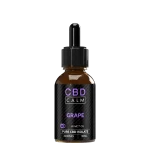
Oil labels usually give total CBD and bottle volume. Edibles may give an amount per piece and per pack. Choose between formats by looking at the label, ingredients, flavour and how the product is measured. Do not assume that two equally sized packs contain the same CBD quantity.
Three terms you will see
- Isolate: a separated cannabinoid ingredient.
- Broad spectrum: a description used for extracts with several compounds and THC removed or reduced.
- Full spectrum: a description used for a wider mixture of plant compounds, potentially including THC.
These labels are a starting point, not a substitute for a report on the actual product.
Before buying
Check the total CBD, ingredients, directions, batch reference and any available certificate of analysis. Retail CBD food products are distinct from prescribed medicines. Read the current safety guidance before deciding whether CBD is appropriate for you.
Source: Food Standards Agency: cannabidiol. Checked 3 October 2026.